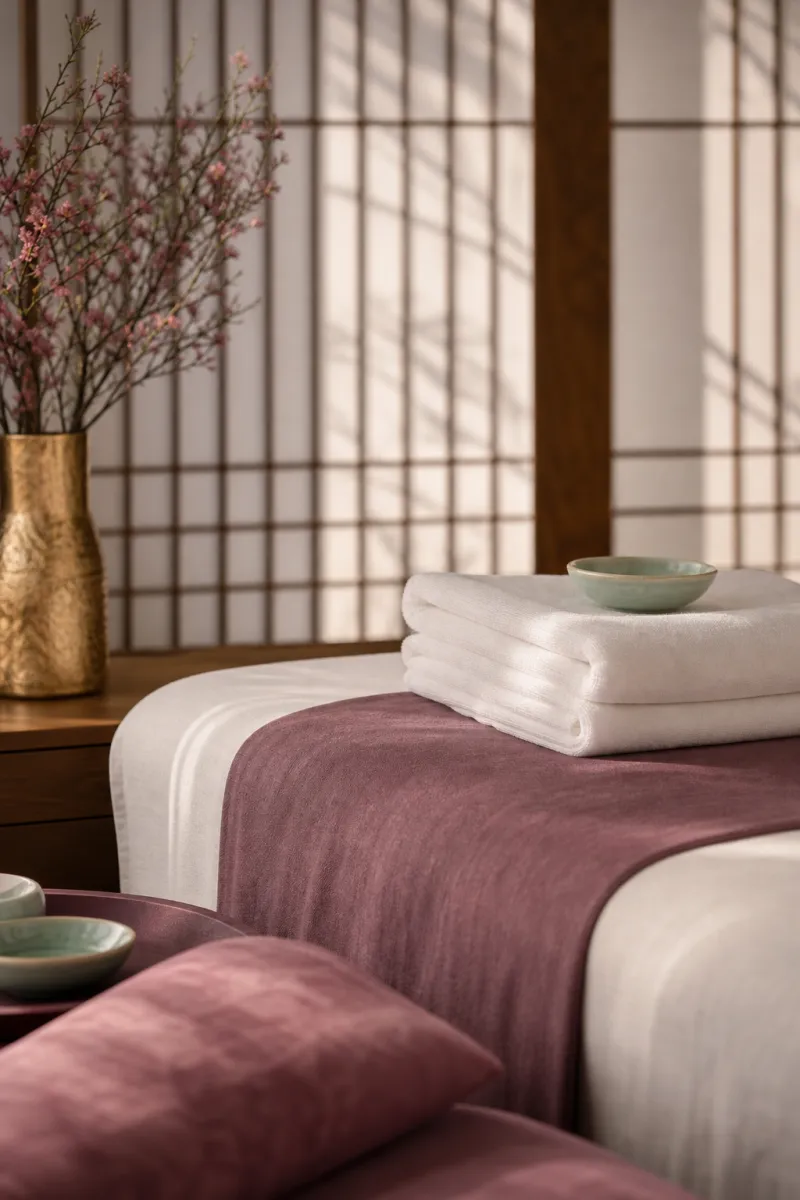
A thread lift in Korea places fine absorbable threads with small barbs under the skin of the cheeks, jawline or upper neck to lift sagging tissue without an incision. The session usually takes about an hour, with local anesthetic injected at each entry point and along the planned paths. Swelling and mild bruising tend to settle within one to two weeks, and many visitors fly home after two or three days if they protect the face from pressure. The lift shows straight away and softens over the following months as the threads dissolve. Clinics price by the number of threads and the area treated, before VAT. This page explains the method and compares clinics and their current prices.
Is it for you?
Who Thread lifts in Gangnam suits, and who should wait
Threads fit adults with early to moderate sagging: soft jowls, a blurred jawline, heavy lower cheeks or a deepening fold beside the mouth, on skin that still has some thickness and spring. They appeal to people who want a visible change within days, a short recovery and no scar, and who accept that the effect is temporary.
Threads do not remove loose skin, do not correct a neck with strong bands and do not stand in for a surgical facelift when tissue hangs well below the jaw. Anyone with marked sagging who wants a long-lasting correction should ask about surgery at the consultation rather than about more threads.
Usually a good fit
- Mild to moderate jowls or a softened jawline
- Flattened midcheeks with reasonable skin thickness
- A trip that allows about one week of recovery
- Preference to avoid incisions and general anesthesia
May be better to wait
- Pregnancy or breastfeeding
- Active acne, infection or inflammation on the face
- Non-absorbable filler or implants along the thread path
- Heavy skin excess that needs a surgical facelift
Clinics in Gangnam
10 clinics for Thread lifts in Gangnam
Every clinic below lists Thread lifts among its treatments. Message a clinic directly.
 1
RE:BERRY Clinic Gangnam
 2
 3
GOAT Gangnam Skin Clinic
 4
Onlif Clinic
 5
BLS Clinic Gangnam
 6
 7
 8
BetterMe Clinic Gangnam
 9
The Cell Skin Clinic
 10
How it works
How a Thread lifts session runs
A thread lift is a mechanical procedure, not an energy-based one. The doctor passes a hollow needle or blunt cannula through the fat layer just under the skin and then withdraws it, leaving behind a thread whose tiny barbs or cogs grip the surrounding tissue. Gentle upward pressure moves the cheek or jowl along the thread, and the barbs hold that new position while healing starts.
Most threads used in Korea are made of polydioxanone (PDO), a suture material the body absorbs over several months while a thin collagen layer forms around each strand. Korean-made cog threads such as Mint Lift and Dooth by CGBIO, which uses T-shaped anchors, appear on many clinic menus. The dose is the number of threads per side, and that count, with the thread brand and gauge, drives the quote.
Evidence on how long the effect lasts is modest. In a 2019 study of 38 patients in the Journal of Dermatological Treatment, Unal and colleagues reported high satisfaction after bidirectional barbed PDO threads placed through a 23-gauge needle. Bertossi and colleagues, writing in Aesthetic Surgery Journal in 2018, followed 160 patients and found the improvement declined noticeably by six months and was no longer apparent at one year.
Assessment and marking
The doctor checks skin thickness and how far the tissue moves when lifted by hand, then marks entry points near the hairline or in front of the ear and the direction of each thread. Photos are taken for later comparison. This takes about 15 to 20 minutes.
Numbing
The face is cleaned with antiseptic and local anesthetic is injected at each entry point and along the planned paths. Some clinics apply numbing cream first. The area is ready within roughly 10 to 20 minutes.
Thread placement
Each loaded needle or cannula is advanced through the fat layer and withdrawn, and the tissue is pressed up onto the barbs. Published protocols use two to four threads per side, depending on the area. Placement usually takes 20 to 40 minutes.
Finishing and aftercare
Thread ends are trimmed below the skin, entry points are checked for puckering and a cold pack is applied. Written aftercare and a follow-up plan are handed over before leaving.
Thread lifts compared with other options
| Feature | Thread lift | Focused ultrasound (e.g. Ultherapy) | Radiofrequency (e.g. Thermage FLX) |
|---|---|---|---|
| How it works | Barbed absorbable threads hold tissue up | Heat points placed at set depths | Broad heating of the dermis |
| Main effect | Repositions sagging tissue | Gradual tightening | Gradual firming |
| When change shows | Same day | Builds over months | Builds over months |
| Needles or incisions | Needle entry points, no incision | None | None |
| Typical downtime | Swelling and bruising for days | Redness for hours | Redness for hours |
At a glance
Thread lifts facts
| Product type | Absorbable barbed or cog threads, mostly PDO |
|---|---|
| Common products | Mint Lift; Dooth by CGBIO |
| Method | Mechanical lift, no energy device |
| Dose unit | Number of threads per side |
| Numbing | Local anesthetic injection, sometimes cream first |
| Session length | About one hour including numbing |
| Downtime | Swelling and bruising for about one to two weeks |
| When results show | Immediately, settling over two to four weeks |
| Earliest flight home | Often two to three days after treatment |
Prices
Thread lifts cost in Gangnam
Prices below come from the listed clinics' own price lists, before VAT. 10% VAT is added at payment.
Thread lifts · 2 cc
Price at 1 listed clinic · approx. $853₩1,173,000 + VATCompare clinicsPDO thread (per thread)
Price at 1 listed clinic · approx. $36₩50,000 + VATCompare clinicsNasolabial thread — MINT Petit (per thread)
Price at 1 listed clinic · approx. $65₩90,000 + VATCompare clinicsPDO/PCL thread — per thread
Price at 1 listed clinic · approx. $73₩100,000 + VATCompare clinicsPCL thread (per thread)
Price at 1 listed clinic · approx. $73₩100,000 + VATCompare clinicsVolume thread (under-eye / nasolabial / Indian line) (per thread)
Price at 1 listed clinic · approx. $80₩110,000 + VATCompare clinicsThread lift — MINT Easy (per thread)
Price at 1 listed clinic · approx. $87₩120,000 + VATCompare clinicsThread Lift 1 Thread
Price at 1 listed clinic · approx. $145₩200,000 + VATCompare clinicsRecovery
What the days after look like
Tightness, swelling and small marks at the entry points. The lift looks strongest now and can seem slightly overdone.
Swelling and bruising peak. Sleep on the back with the head raised, choose soft food and avoid opening the mouth wide.
Swelling eases and small dimples usually smooth out. Skip facial massage, saunas and hard exercise.
The tissue settles into a more natural contour as collagen forms around the threads.
The threads dissolve and the lift gradually fades; in the Bertossi cohort little visible change remained at one year.
Safety
Thread lifts risks and limits
- Swelling, bruising and tenderness along the thread paths are common for the first one to two weeks.
- Bertossi and colleagues reported early complications in about a third of 160 patients, most often threads shifting toward the surface, redness, infection and skin dimpling.
- Puckering near an entry point or a thread end that can be felt or seen may need adjustment or removal.
- Infection, nerve irritation and asymmetry are less common and need prompt review by the treating doctor.
- The lift is temporary: a 2017 review by Tavares and colleagues in the Brazilian Journal of Otorhinolaryngology concluded threads should not yet be adopted as an alternative to a facelift.
Evidence
Research behind this page
- Effectiveness, Longevity, and Complications of Facelift by Barbed Suture InsertionAesthetic Surgery Journal · 2018 · Bertossi D, Botti G, Gualdi A, Fundarò P, Nocini R, Pirayesh A, et al. · doi:10.1093/asj/sjy042
In 160 patients treated with barbed PDO threads, the early lift declined by six months and was absent by one year, with an early complication rate of 34%.
- Facial thread lifting with suture suspensionBrazilian Journal of Otorhinolaryngology · 2017 · Tavares J, Oliveira C, Torres R, Bahmad F · doi:10.1016/j.bjorl.2017.03.015
A literature review finding that adverse events are mostly minor and short-lived, but durability data remain unclear and threads should not yet replace a facelift.
- Experiences of barbed polydioxanone (PDO) cog thread for facial rejuvenation and our technique to prevent thread migrationJournal of Dermatological Treatment · 2019 · Unal M, İslamoğlu G, Ürün Unal G, Köylü N · doi:10.1080/09546634.2019.1640347
In 38 patients treated with bidirectional barbed PDO cog threads, all reported satisfaction, and tying threads at a shared entry point was described as a way to limit migration.
FAQ
Questions about Thread lifts in Gangnam
How long does a thread lift last?
The visible lift usually fades over several months as the threads dissolve, and research suggests little change remains after a year. In the 2018 Aesthetic Surgery Journal cohort by Bertossi and colleagues, improvement declined noticeably by six months and was no longer apparent at one year. Results vary from person to person, so ask the doctor what timeline to expect.
Does a thread lift hurt?
Most people feel pressure and brief stinging during numbing, then pulling rather than sharp pain while the threads go in. Local anesthetic is injected at every entry point and along each path. The face can ache or feel tight for several days, especially when chewing or yawning, and cold packs plus pain relief approved by the treating doctor usually keep this manageable.
Can I fly home after a thread lift in Korea?
Many visitors fly two or three days after treatment, once early swelling has eased and the doctor has checked the entry points. Cabin pressure is not the main concern; leaning on the face, heavy luggage and sleeping against a window are. Keep the head raised and carry the written aftercare. A spare day before the flight makes it easier to fix a pucker or a visible thread end.
How many threads will I need?
The count depends on the area and how far the tissue needs to move, and it is agreed at the consultation itself. The Bertossi cohort used two or three threads per side for the midcheek and two to four per side along the jawline. Before numbing starts, ask for the planned number per side and the thread brand in writing.
Do the threads stay in my face?
PDO threads do not stay; the body absorbs them gradually over several months, leaving a thin layer of collagen around each former strand. Non-absorbable threads exist but carry higher risks of extrusion and nerve irritation, so most clinics in Korea now prefer dissolving material. Ask which material and gauge the clinic will use and how long it takes to absorb.
What should I avoid after the procedure?
Avoid pressure, wide mouth movements and heat on the face for about two weeks. That means no facial massage, no sauna, no hard exercise and no long dental appointments. Sleep on your back with the head raised and eat soft food for the first days. Makeup is usually allowed after a day or two if the entry points are kept clean.
When will I see the result?
The change is visible straight after treatment, though swelling exaggerates it for the first days. As swelling settles over two to four weeks, the contour softens, and that is the point to judge the outcome against the assessment photos. If one side still looks different after swelling has gone, contact the clinic rather than waiting for it to even out.
Can threads be combined with filler or Botox?
Yes, threads are often paired with filler or botulinum toxin, but timing and placement matter. Filler restores lost volume that threads cannot add, while toxin can relax muscles that pull the lower face down. Some doctors place both on the same day in different zones; others space them a couple of weeks apart to judge the lift first. Tell the doctor about any filler you already have, especially non-absorbable products.
How can I check which thread brand is used?
Ask to see the sealed thread packets before numbing begins and check that brand, gauge and count match the written plan. Each packet carries a product name, lot number and expiry date, and many clinics let you photograph it. Brands such as Mint Lift or Dooth differ in barb design, so the label tells you what you are paying for.
What if the result looks uneven or a thread shows?
Return to the clinic as soon as you notice it, because early adjustment is simpler. Mild dimpling often settles within days. A thread end that can be felt or that pokes through the skin is usually trimmed or removed. Unal and colleagues described tying threads at a shared entry point to limit migration, so ask how the clinic handles this.